
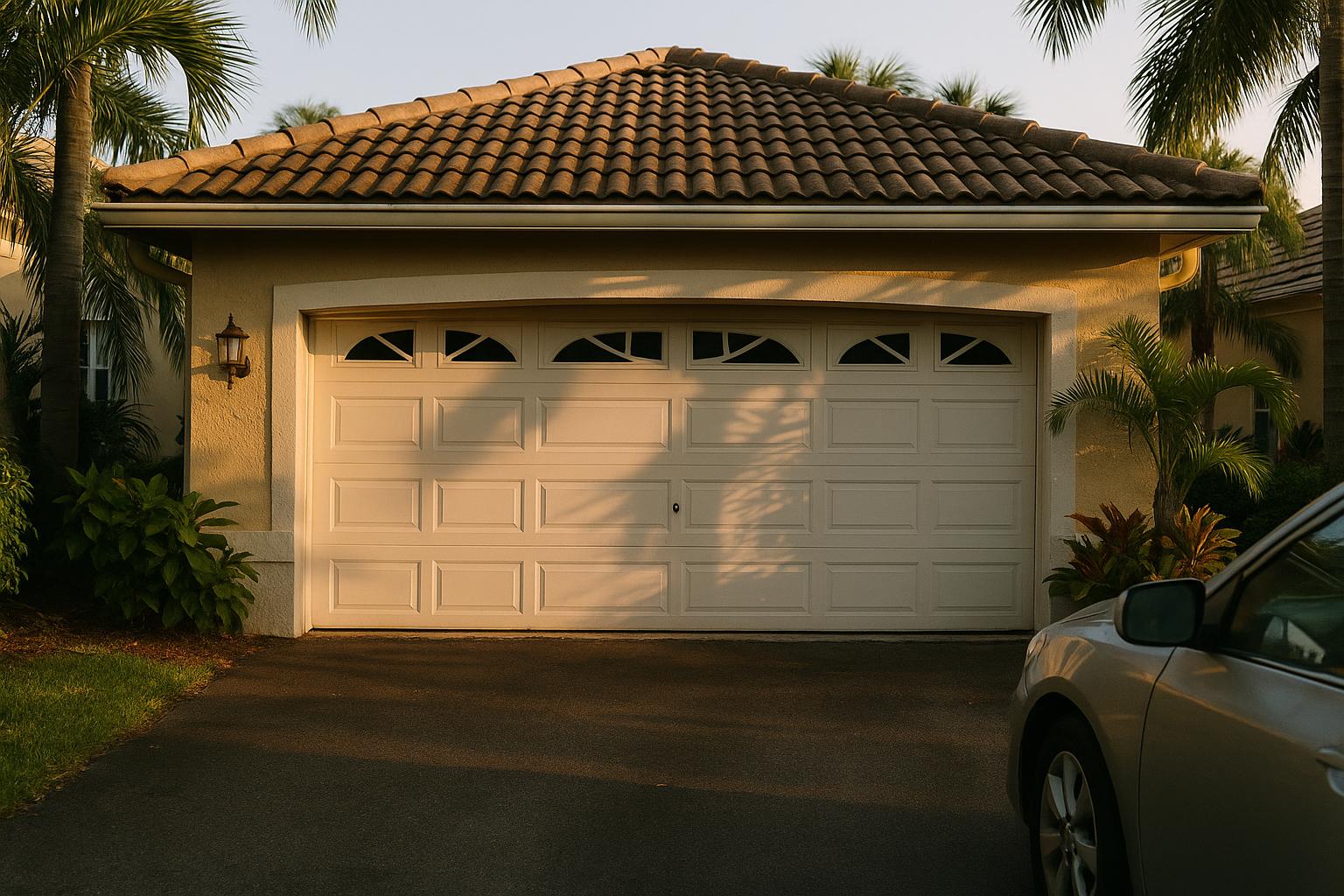
You're Running Late and Your Garage Door Won't Budge
It's 7:15 in the morning. You've got your coffee, your keys, and exactly enough time to make it to work if you leave right now. You press the button on your garage door opener and... nothing. Or maybe you hear a hum, a click, or a grinding noise, but the door stays put.
This is one of the most common calls we get at Port Charlotte Door & Opener, and it happens more often than you'd think. The good news is that not every stuck garage door means an expensive repair. Sometimes the fix is simple enough to handle yourself. Other times, you'll need a professional — and knowing the difference can save you time, money, and frustration.
Here's a practical guide to figuring out why your garage door won't open and what to do about it.
Check the Obvious Things First
Before you start worrying about broken parts, rule out the simple stuff. You'd be surprised how often the problem is something basic.
- Dead remote batteries: If your wall-mounted button works but your remote doesn't, swap in fresh batteries. This solves the problem more often than most people want to admit.
- The door is locked: Many garage doors have a manual lock — a handle or slide bolt on the inside. If someone locked it from inside, the opener will strain against it and fail to open the door. Check for this before assuming something mechanical is wrong.
- Power outage or tripped breaker: If the opener doesn't respond at all — no lights, no sounds — check whether it's getting power. Look at the outlet it's plugged into and check your breaker panel. Here in Port Charlotte, summer storms can trip breakers without you even realizing it.
- Disconnected emergency release: If someone pulled the red emergency release cord, the door is disconnected from the opener. You'll need to reconnect it before the opener can do its job. Usually this means pulling the cord toward the door and then running the opener so the trolley re-engages.
The Opener Runs but the Door Doesn't Move
If you hear the motor running but the door stays in place, the problem is usually one of two things.
Stripped Gear in the Opener
Most belt-drive and chain-drive openers use a nylon gear inside the motor housing. Over time, this gear wears down and eventually strips. When it does, the motor spins but can't transfer power to move the door. You'll typically hear the motor running normally, but nothing happens.
This is a common repair, especially on openers that are 8 to 15 years old. A technician can replace the gear assembly without replacing the entire opener in most cases.
Broken Springs
Your garage door springs do the heavy lifting — literally. If a spring breaks, the opener usually can't generate enough force to raise the door on its own. You might hear the motor strain or the door might lift an inch or two before stopping.
Important: Do not try to force the door open or replace springs yourself. Garage door springs are under extreme tension and can cause serious injury. This is always a job for a trained technician.
The Door Opens Partway and Stops
A door that opens a few inches or a few feet and then stops is telling you something. Common causes include:
- Obstructed tracks: Dirt, debris, or a small object caught in the track can prevent the rollers from traveling smoothly. Inspect both tracks from top to bottom.
- Worn or broken cables: The lift cables work with the springs to raise the door evenly. If one cable frays or snaps, the door may lift unevenly or stop partway. Like springs, cables are under tension and should only be handled by a professional.
- Opener force settings: Your opener has force settings that control how hard it works to open and close the door. If these are set too low, the opener may give up before the door is fully open. While you can adjust these yourself using the dials or buttons on the opener unit, it's best to understand why the settings need changing in the first place — sometimes the real issue is a balance problem with the door.
Temperature and Humidity Can Be Factors
Living in Port Charlotte means dealing with heat, humidity, and the occasional cold snap. All of these affect your garage door.
In the summer months, metal components expand and tracks can shift slightly. Humidity can cause wooden doors to swell, creating friction. During the rare cold mornings we get in winter, lubricant on the springs and rollers can thicken, making the door harder to move.
If your door seems sluggish on particularly hot or cool mornings but works fine later in the day, temperature is likely a factor. A proper maintenance visit that includes lubrication and track adjustment usually takes care of this.
When the Photo Eyes Are the Problem
Your garage door has two small sensors near the floor on either side of the opening. These photo-eye sensors are a safety feature designed to prevent the door from closing on a person, pet, or object. While they primarily affect closing, misaligned or dirty sensors can sometimes interfere with the opener's overall operation, causing error codes or preventing the system from responding to commands.
Check that both sensors have steady lights — typically one green and one amber. If a light is blinking, try wiping the lenses with a clean cloth and making sure nothing is blocking the beam between them. If the lights still blink after cleaning, the sensors may need to be realigned or replaced.
How to Get Out of Your Garage in the Meantime
If your door won't open and you need to leave, use the emergency release. Pull the red cord hanging from the opener rail. This disconnects the door from the opener so you can lift it manually.
Keep in mind that if a spring is broken, the door will be extremely heavy — potentially 150 to 250 pounds or more depending on the size and material. If it feels dangerously heavy, don't force it. Call someone for help or find another way out.
Once you've manually opened the door, be aware that it won't lock automatically. If you're leaving for the day, you may need to lock it from inside and exit through another door in your home.
Know When to Call a Professional
Some garage door problems are safe to troubleshoot on your own — dead batteries, tripped breakers, dirty sensors. But anything involving springs, cables, or internal opener components should be left to a trained technician. These parts are under high tension and can cause serious harm if handled incorrectly.
If your garage door won't open and the basic checks don't solve it, give us a call. At Port Charlotte Door & Opener, we handle these situations every day across Port Charlotte, Punta Gorda, North Port, and the surrounding areas. We'll diagnose the problem, explain your options, and get your door working again so your morning routine can get back to normal.