
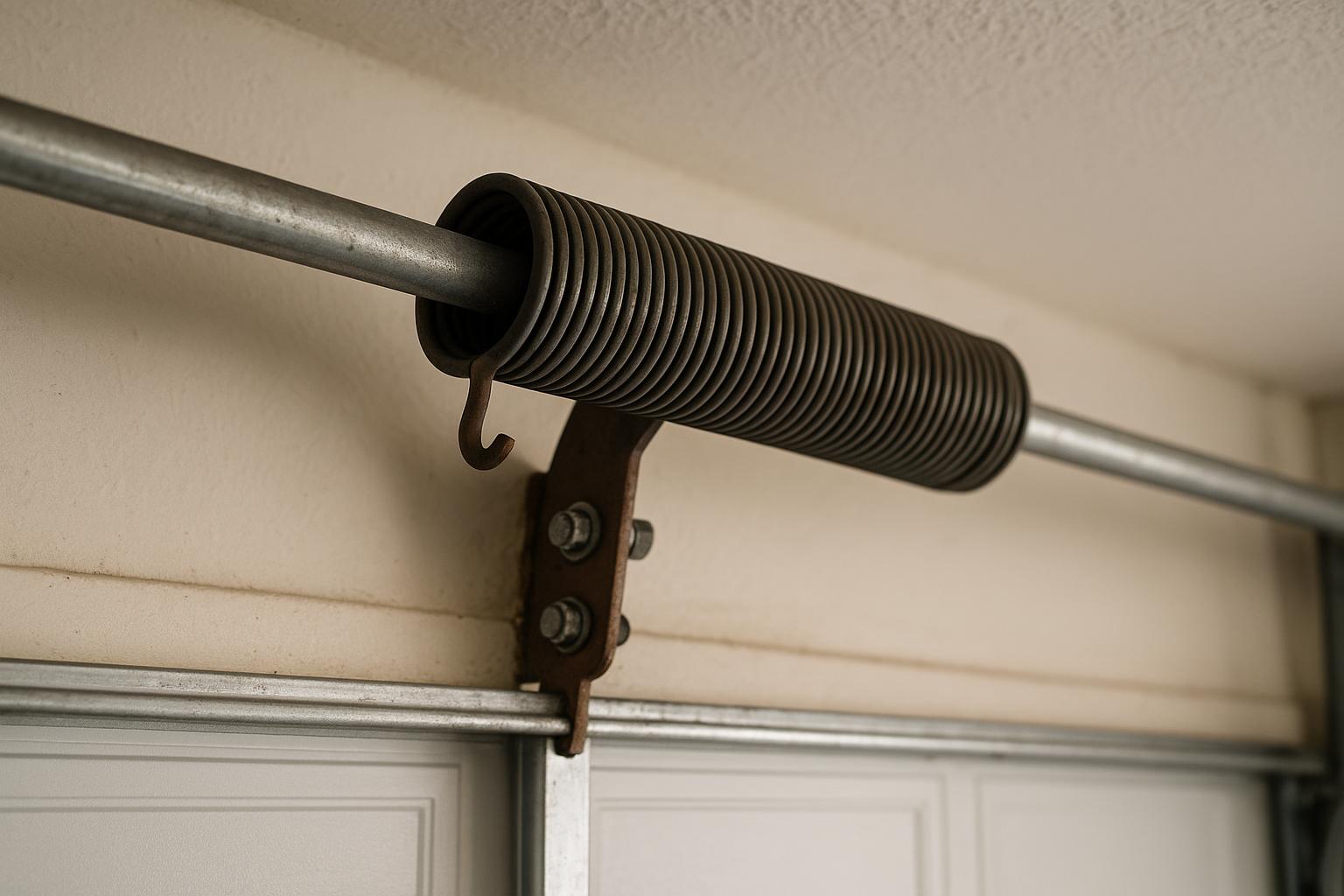
Your Garage Door Springs Are Doing More Work Than You Think
Most homeowners in Port Charlotte don't give their garage door springs a second thought — until the morning they press the button and nothing happens. Or worse, they hear a loud bang from the garage that sounds like a gunshot.
That bang is the sound of a torsion spring snapping, and it's one of the most common garage door emergencies we respond to. The good news is that springs almost always give warning signs before they fail completely. If you know what to look for, you can schedule a replacement on your terms instead of dealing with a door that's stuck open — or shut — at the worst possible time.
What Do Garage Door Springs Actually Do?
Your garage door is heavy. A standard two-car door can weigh between 150 and 250 pounds, and some insulated or wood doors weigh even more. The springs are what make it possible for your opener to lift that weight. They store mechanical energy when the door closes and release it when the door opens, doing the heavy lifting so the opener motor doesn't have to.
There are two main types of springs used in residential garage doors:
- Torsion springs — mounted on a metal shaft above the door opening. These are the most common type in modern installations.
- Extension springs — mounted along the horizontal tracks on either side of the door. These are more common in older homes.
Both types are under extreme tension and have a limited lifespan, typically rated for about 10,000 cycles. One cycle equals one full open and one full close. For a household that uses the garage door four times a day, that works out to roughly seven years.
7 Warning Signs Your Springs Are Failing
1. The Door Feels Heavier Than Usual
If you disconnect your opener and try to lift the door manually, it should feel relatively light — maybe 10 to 15 pounds of effort. If it feels like you're deadlifting a barbell, your springs have likely lost tension and aren't counterbalancing the door's weight properly anymore.
2. The Door Opens Unevenly or Crooked
When one spring weakens faster than the other (or if one has already broken), the door may rise unevenly, tilting to one side. This puts stress on the tracks, cables, and opener, and it can cause additional damage if left unaddressed.
3. You Hear Squealing or Grinding Noises
Some noise is normal, but loud squealing, popping, or grinding when the door moves can indicate that a spring is corroded, stretched, or close to snapping. This is especially common in our Port Charlotte climate, where humidity and salt air accelerate wear on metal components.
4. The Door Slams Shut Quickly
A properly functioning spring controls the speed at which your door closes. If the door drops faster than normal or slams to the ground, the springs aren't providing enough resistance. This is a safety hazard, especially if you have children or pets.
5. There's a Visible Gap in the Spring
Take a look at the torsion spring above your door. A healthy spring is a tightly wound coil with no gaps. If you see a visible separation or gap in the coils — even a small one — the spring has already broken and needs to be replaced immediately.
6. The Opener Struggles or Stops Mid-Cycle
When springs lose their ability to counterbalance the door, your opener has to work much harder. You might notice it straining, moving slower, or stopping partway through a cycle. Running the opener under this kind of load will burn out the motor prematurely, turning a spring replacement into a much more expensive repair.
7. The Door Won't Stay Open
If you lift the door manually to about waist height and let go, it should stay in place. If it slides back down, the springs don't have enough tension to hold the door's weight. This is one of the earliest and most reliable signs of spring fatigue.
Why You Should Never Replace Garage Door Springs Yourself
We understand the temptation. There are plenty of YouTube videos showing DIY spring replacement, and the parts themselves aren't expensive. But garage door springs are under an enormous amount of stored energy. A torsion spring that releases unexpectedly can cause serious injury or death.
Every year, emergency rooms across the country treat people who attempted DIY spring repairs. Professional technicians use specialized tools, have proper training, and know how to safely release and reset spring tension. This is one repair where calling a professional isn't just recommended — it's essential.
How Long Do Replacement Springs Last?
Standard-duty springs are rated for around 10,000 cycles, but high-cycle springs are available that can last 25,000 or even 50,000 cycles. If you're replacing springs, it's worth asking about high-cycle options. The upfront cost is slightly higher, but you'll get significantly more years out of them — and you won't have to deal with the inconvenience of another failure.
Here in Port Charlotte and the surrounding areas like Punta Gorda, North Port, and Englewood, we also recommend asking about galvanized or coated springs. The coastal humidity in Southwest Florida is tough on bare steel, and corrosion-resistant springs hold up much better over time.
What to Do If Your Spring Breaks
If a spring has already snapped, here's what we recommend:
- Don't try to open the door. Without functioning springs, the full weight of the door is unsupported. Forcing it open — either manually or with the opener — can cause damage or injury.
- Disconnect the opener. Pull the emergency release cord to disengage the opener from the door. This prevents the motor from trying to lift the unsupported weight.
- Call a professional. A qualified technician can replace the springs safely, inspect the rest of the system for related damage, and have your door working again the same day in most cases.
Don't Wait for the Bang
If you've noticed any of the warning signs above, the smartest move is to schedule an inspection before the spring fails completely. A planned replacement is faster, safer, and less disruptive than an emergency call when your car is trapped in the garage on a Monday morning.
At Port Charlotte Door & Opener, we replace springs on all major garage door brands and keep common sizes in stock so most repairs can be completed in a single visit. Whether you're in Port Charlotte, Rotonda West, Murdock, or anywhere else in the area, we're here to help you stay ahead of the problem.
Give us a call or reach out online to schedule a spring inspection. A little attention now can save you a lot of hassle later.