
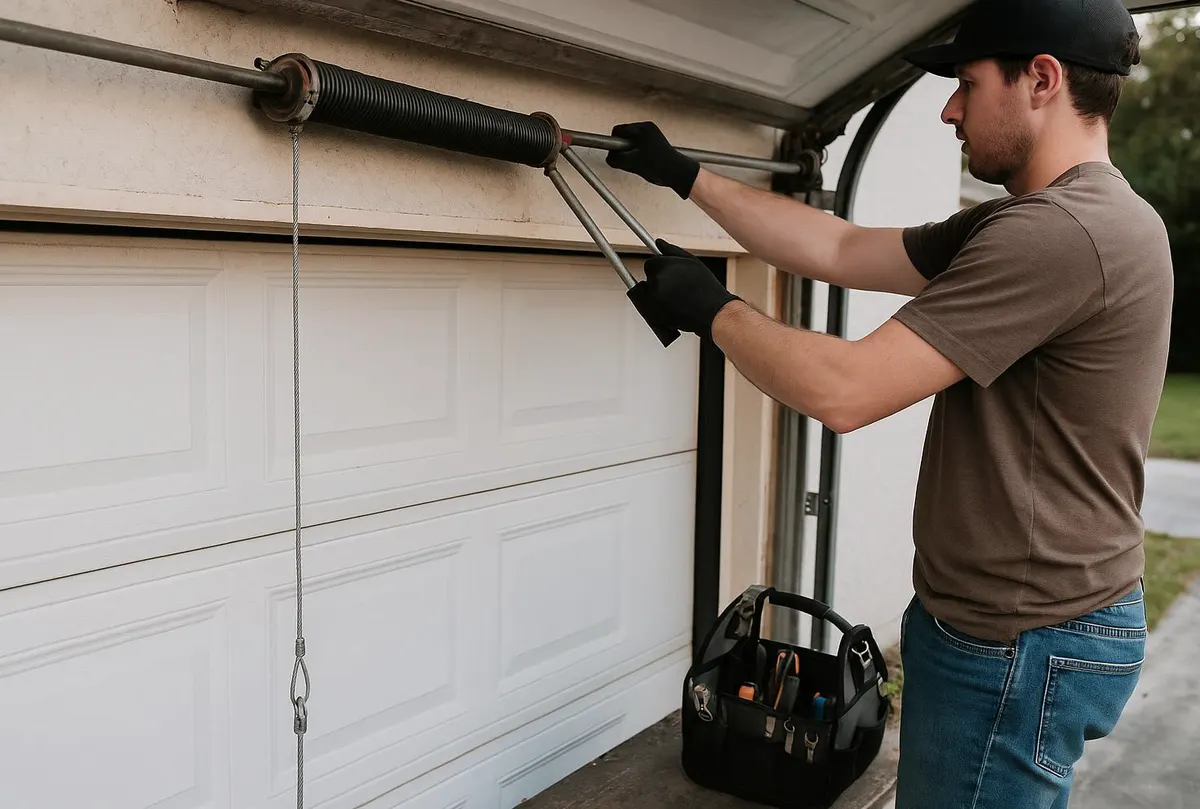
A typical late-fall service call in this area starts the same way: a homeowner says the garage door was fine all summer, and now suddenly it's binding, squeaking, or closing crooked. Nine times out of ten, nothing actually broke overnight. What happened is that the door spent months swelling, rusting a little, and taking a beating from afternoon storms, and now that the air is drying out, all of that wear is showing up at once.
Florida "Winter" Still Means Maintenance, Just a Different Kind
Winter here doesn't bring freezing temperatures or snow load, so a lot of homeowners skip seasonal garage door care altogether. That's a mistake. The real issue isn't cold, it's the transition. After months of heat, humidity, and hurricane-season storms, the drier and milder stretch ahead is actually the best window to catch problems before they turn into a stuck door or a dead opener on a day you need it most.
Check for Storm Season Wear First
Before you do anything else, walk the door and track system looking for damage that built up quietly over the summer:
- Track alignment: Wind-driven rain and gusty storms can rack a door slightly off its tracks over repeated cycles. Look for gaps between the rollers and the track, or a door that looks slightly tilted when closed.
- Panel swelling: If you have a wood or composite door, humidity can cause panels to swell during summer. As the air dries out, those panels can shrink back, sometimes unevenly, which shows up as new gaps or a door that doesn't seal the way it used to.
- Wind-load hardware: If your door has reinforced struts or wind-rated hardware, confirm none of the brackets loosened or bent during storm season. Hurricane season technically continues into late fall, so this isn't just a backward-looking check.
Hardware, Rust, and Salt Air
Moisture is the real enemy of a garage door system here, and it doesn't take a direct storm hit to cause damage. Salt air drifting inland from the coast, combined with months of humidity, is enough to start corrosion on hinges, springs, and track bolts, especially if the door hasn't been lubricated recently.
- Inspect hinges, rollers, and the torsion spring for surface rust or pitting. Light rust can often be cleaned and lubricated; heavy pitting on a spring is a sign it's weakening and should be evaluated, not just oiled.
- Use a silicone-based garage door lubricant on hinges, rollers, and the spring. Avoid heavy grease, which attracts dust and grit kicked up during storms.
- Check exposed bolts and brackets for corrosion, particularly if your home is closer to the water. Replacing a handful of rusted fasteners now is far cheaper than replacing a hardware assembly later.
Weatherstripping and Seals
The rubber seal along the bottom of the door and the weatherstripping around the sides take a beating during a Florida summer, between UV exposure, heat, and constant afternoon downpours. By fall, it's common to find seals that are cracked, flattened, or pulling away from the track.
Walk around the closed door during daylight and look for light coming through gaps. A worn seal doesn't just let in bugs and dust, it lets in wind-driven rain during any late-season storms, which can lead to water pooling inside the garage and accelerating rust on stored tools, equipment, or the door panel itself. Replacing bottom seal and side weatherstripping is a straightforward job and one of the better returns on a small repair before the drier months set in.
Opener and Safety Features
Humidity and heat are hard on electronics, and garage door openers are no exception. This is a good time to test the whole system rather than assume it's fine because the door still opens:
- Test the auto-reverse safety feature by placing a block of wood on the ground where the door closes. It should reverse on contact. If it doesn't, that's a safety issue, not a convenience one.
- Check the photo-eye sensors near the bottom of the tracks. Humidity and condensation can fog or corrode the sensor lenses, causing random reversals or a door that won't close at all.
- If your opener has battery backup, test it now. Power outages are more common during storm activity, and a backup battery that's been sitting unused all summer may not hold a charge when you actually need it.
- Listen for new grinding or straining sounds from the opener motor. Humidity swelling combined with a weakening spring puts extra load on the opener, which shortens its lifespan.
When to Call Port Charlotte Door & Opener
If you're seeing rust that's gone beyond surface level, a door that's visibly off its tracks, or an opener that struggles, hesitates, or won't reverse properly, it's time to call in a professional rather than keep adjusting things yourself. Our technicians handle garage door repair and preventive maintenance for homes throughout Port Charlotte, Punta Gorda, North Port, Englewood, Murdock, Rotonda West, Deep Creek, and Cape Coral, and a seasonal inspection typically covers spring tension, track alignment, hardware corrosion, and full opener safety testing in one visit. If a spring is showing heavy wear from a summer of humidity, we'll talk through spring replacement options before it fails on you during a cold snap or, more likely here, during the next round of storms.
If your garage door has been acting up since summer, don't wait for it to get worse. Call Port Charlotte Door & Opener today and get it checked out before the season changes again.