
Your Garage Door Works Hard — Are You Taking Care of It?
Think about how many times you open and close your garage door each day. If you're like most families in Port Charlotte, it's probably at least four times — maybe more. That adds up to well over a thousand cycles per year, and every single one puts stress on springs, cables, rollers, and hardware.
Despite being the largest moving part of your home, the garage door is one of the most neglected when it comes to regular maintenance. Most homeowners don't think about it until something goes wrong — a spring snaps, the opener grinds to a halt, or the door gets stuck halfway up on a humid Florida morning.
The good news? A little preventive care goes a long way. Let's break down how often you should service your garage door, what maintenance involves, and why it matters for your safety and your wallet.
The Short Answer: At Least Once a Year
At a minimum, your garage door should receive a professional inspection and tune-up once per year. Think of it like an annual checkup for your car — catching small issues early prevents expensive breakdowns later.
However, there are situations where more frequent service makes sense:
- Heavy daily use: If your garage door is your primary entry point and gets used six or more times a day, consider servicing it every six months.
- Coastal and humid climates: Living in Port Charlotte means your garage door hardware is exposed to salt air, humidity, and intense heat. These conditions accelerate wear on metal components, weatherstripping, and lubricants.
- Older garage doors: If your door or opener is more than 10 years old, more frequent checkups help you stay ahead of age-related failures.
- After a major storm: Southwest Florida's hurricane season can take a toll on garage doors. After any significant storm, it's wise to have your door inspected for damage you might not see from the outside.
What Does a Garage Door Tune-Up Include?
A proper garage door service visit isn't just a quick glance and a squirt of oil. Here's what a thorough maintenance appointment should cover:
Visual Inspection
A technician will examine every visible component of your garage door system — panels, hinges, brackets, tracks, springs, cables, rollers, and weatherstripping. They're looking for signs of wear, rust, fraying, cracks, or misalignment.
Lubrication
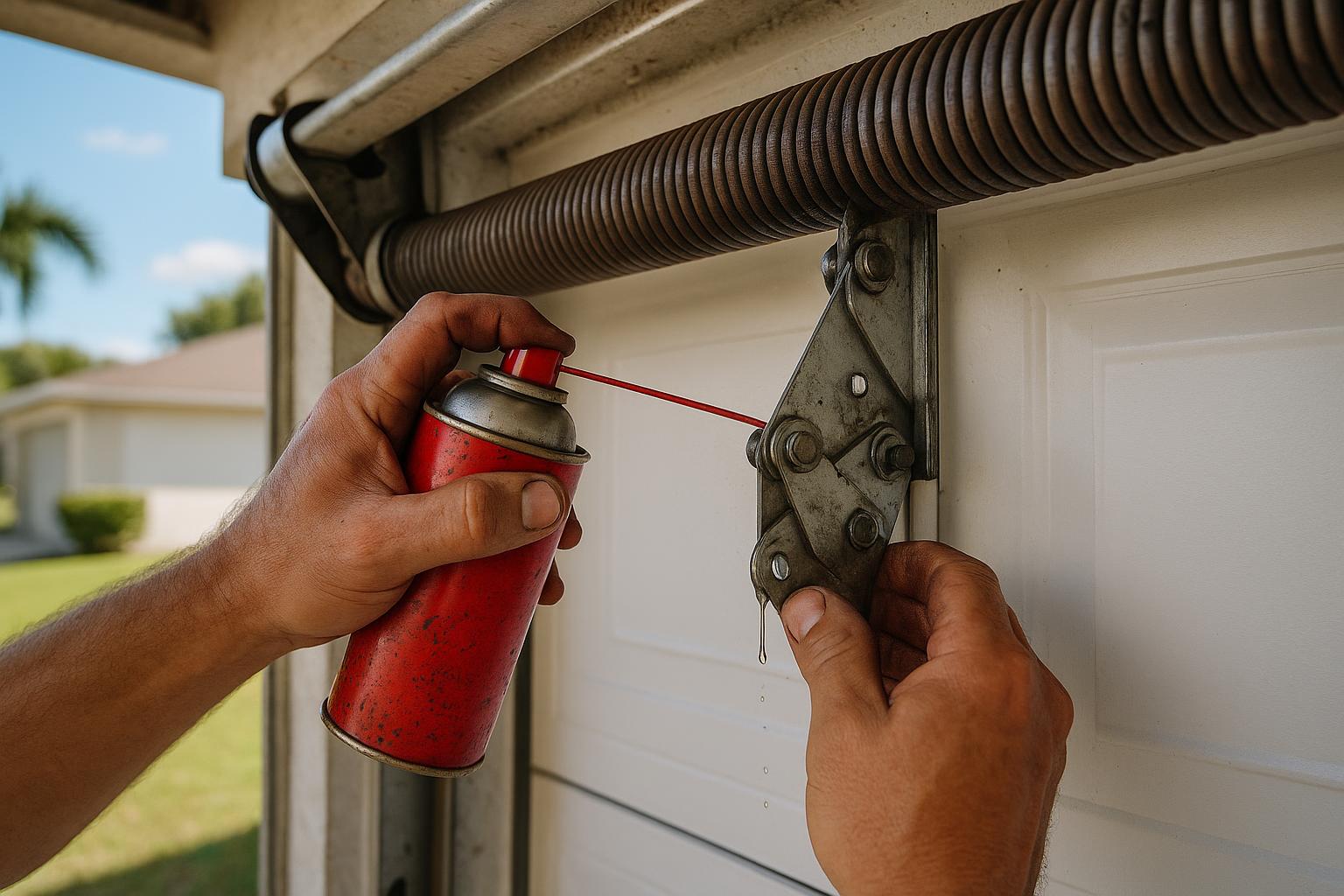
Moving parts need proper lubrication to operate smoothly and quietly. This includes the springs, hinges, rollers, and bearing plates. In our humid climate here in Port Charlotte, the wrong lubricant can attract dirt and grime, so it matters what product is used and how it's applied.
Balance Test
A balanced garage door should stay in place when you manually lift it halfway and let go. If it slides up or crashes down, the springs are out of balance. An unbalanced door puts extra strain on your opener and shortens its lifespan.
Safety Reversal Test
Federal law requires garage doors manufactured after 1993 to have auto-reverse safety features. During maintenance, your technician should test both the mechanical reversal (placing an object under the door) and the photo-eye sensors to make sure they're functioning correctly. This is especially important if you have children or pets.
Hardware Tightening
Vibration from daily use gradually loosens bolts, brackets, and screws. A maintenance visit includes tightening all hardware to keep everything secure and properly aligned.
Track Alignment Check
Even slightly misaligned tracks can cause your door to bind, scrape, or operate unevenly. Your technician will check that the tracks are plumb, level, and properly spaced.
Opener Evaluation
Your garage door opener gets inspected too — including the drive mechanism, circuit board, remote functionality, and force settings. Catching opener issues early can save you from being locked out of your garage unexpectedly.
What You Can Do Between Professional Visits
You don't need to be a technician to keep an eye on your garage door between annual service appointments. Here are a few simple things homeowners can do:
- Listen for unusual sounds: Grinding, squealing, popping, or scraping noises are early warning signs that something needs attention.
- Watch the door move: It should travel smoothly without jerking, hesitating, or shaking. Uneven movement often signals a problem with springs, cables, or tracks.
- Keep the tracks clear: Wipe down the inside of the tracks occasionally to remove dirt and debris. Don't lubricate the tracks themselves — that can actually cause problems.
- Test the safety reversal: Place a roll of paper towels under the door and press the close button. The door should reverse immediately upon contact. If it doesn't, call a professional right away.
- Inspect the weatherstripping: The rubber seal along the bottom of the door keeps out rain, pests, and debris. Florida's sun and heat break down weatherstripping faster than in cooler climates, so replace it when you notice cracking or gaps.
Why Skipping Maintenance Costs You More
We understand the temptation to skip maintenance when everything seems fine. But here's the reality: most garage door emergencies are preventable.
A broken spring that could have been identified as worn during a routine inspection now requires an emergency service call. A failing opener that was showing subtle signs for months finally dies on a Saturday morning when you need to get your car out. A frayed cable snaps and damages your door panels, turning a minor repair into a major expense.
Regular maintenance typically costs a fraction of what emergency repairs run. More importantly, it keeps your family safe. A garage door weighs several hundred pounds, and a malfunctioning door or failed safety feature is a genuine hazard.
Florida's Climate Makes Maintenance Even More Important
Homeowners in Punta Gorda, North Port, Englewood, and throughout the Port Charlotte area deal with conditions that are uniquely tough on garage doors. High humidity causes metal parts to corrode faster. Intense UV exposure degrades rubber seals and plastic components. The heat can affect lubricant performance and even warp certain door materials over time.
Salt air — even miles from the coast — accelerates rust on springs, hinges, and tracks. If you live in Rotonda West or Englewood near the water, this is especially relevant. Annual maintenance gives a professional the chance to catch corrosion before it compromises the integrity of critical components.
Schedule Your Garage Door Tune-Up
If it's been more than a year since your last garage door service — or if you can't remember the last time it was serviced at all — now is a great time to schedule a maintenance visit. At Port Charlotte Door & Opener, we provide thorough, honest inspections and tune-ups designed to extend the life of your garage door and keep it operating safely.
Whether you need preventive maintenance, a specific repair, or you're just not sure what that new noise means, we're here to help. Give us a call or reach out online to set up an appointment. Your garage door works hard for you every day — a little maintenance goes a long way toward returning the favor.